What Makes an Agent Actually Think? Context Is King
Everyone's talking about agents now. The hype is everywhere. So what are they, really?
First, let's be clear: agents aren't chatbots. They're not just automation with a fancy name. They're context-aware systems that understand the situation, not just execute commands. They moved from being "hands" to being assistants that actually get it.
On Datazone, an agent doesn't sit around waiting for you to ask questions. It watches, connects the dots, and acts. Here's what that actually looks like.
Why agents matter (beyond automation)
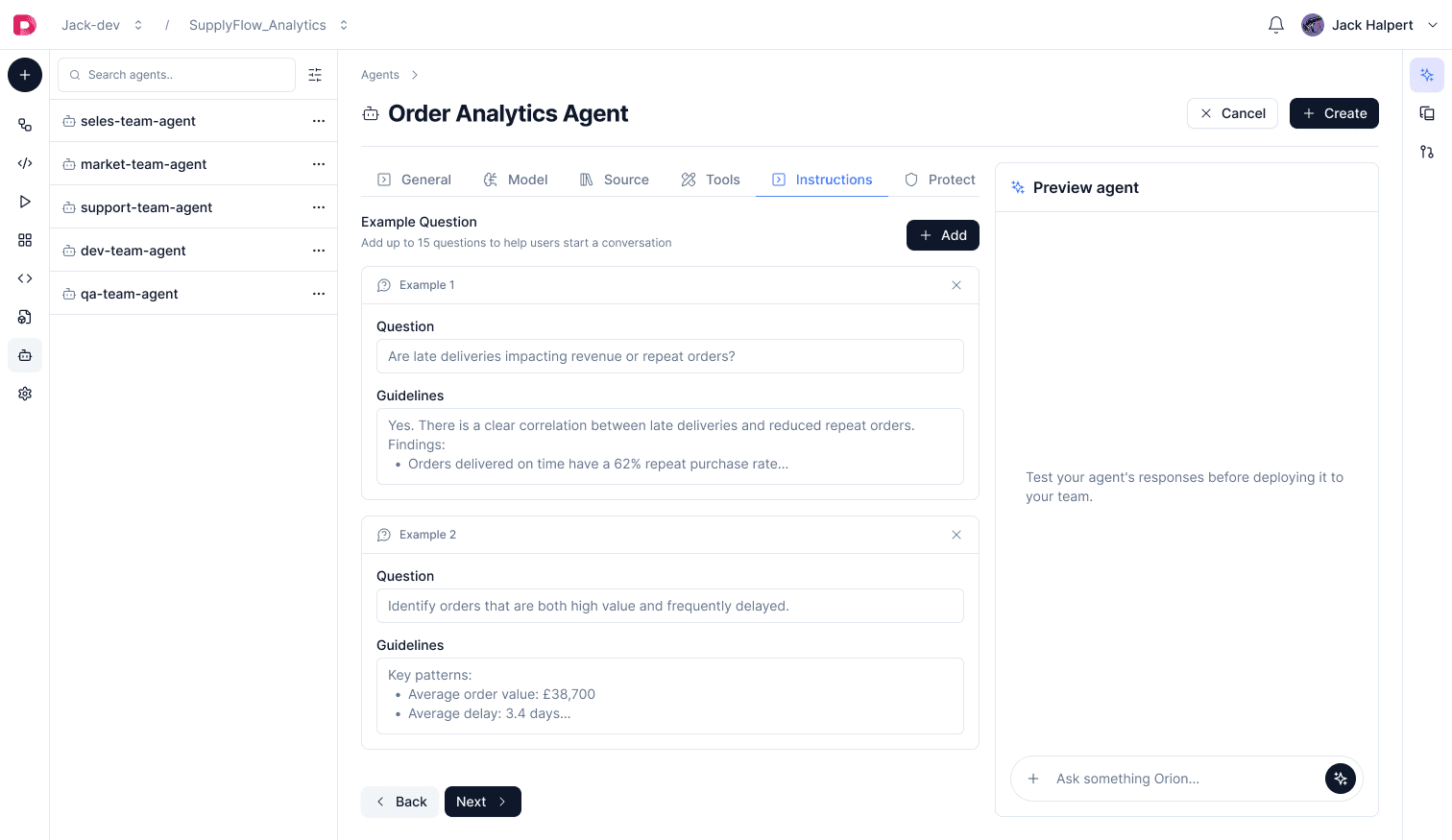
For us, agents aren't just bots; they are an active part of the data lifecycle. An agent on Datazone:
- Constantly observes — It doesn't wait for a manual trigger.
- Spots anomalies — It notices changes and "noise" instantly.
- Connects signals — It links triggers across different systems.
- Acts proactively — It takes steps before a human even realizes there's a problem.
The system no longer waits for you to ask, "What happened?" Instead, it tells you: "This is important. Right now."
The universal problem
Regardless of the industry, every team we talk to wants the same thing: less manual thinking, faster decisions, and systems that act, not just report. At Datazone, we don't view an agent as something you just "chat" with. It's a decision layer with role awareness and deep context.
How it works: context is king
An agent without context is just noise. An agent without relationships is superficial. By using a graph-based approach, we give agents the ability to actually understand:
- Supply Chain — An agent doesn't just show a delay; it evaluates routes, supplier history, and the ripple effect on the entire network.
- Finance — It doesn't just list transactions; it identifies patterns that shouldn't exist.
- Legal — It doesn't just find documents; it connects cases, parties, timelines, and risks.
Same infrastructure. Different context.
The Datazone Agent Framework
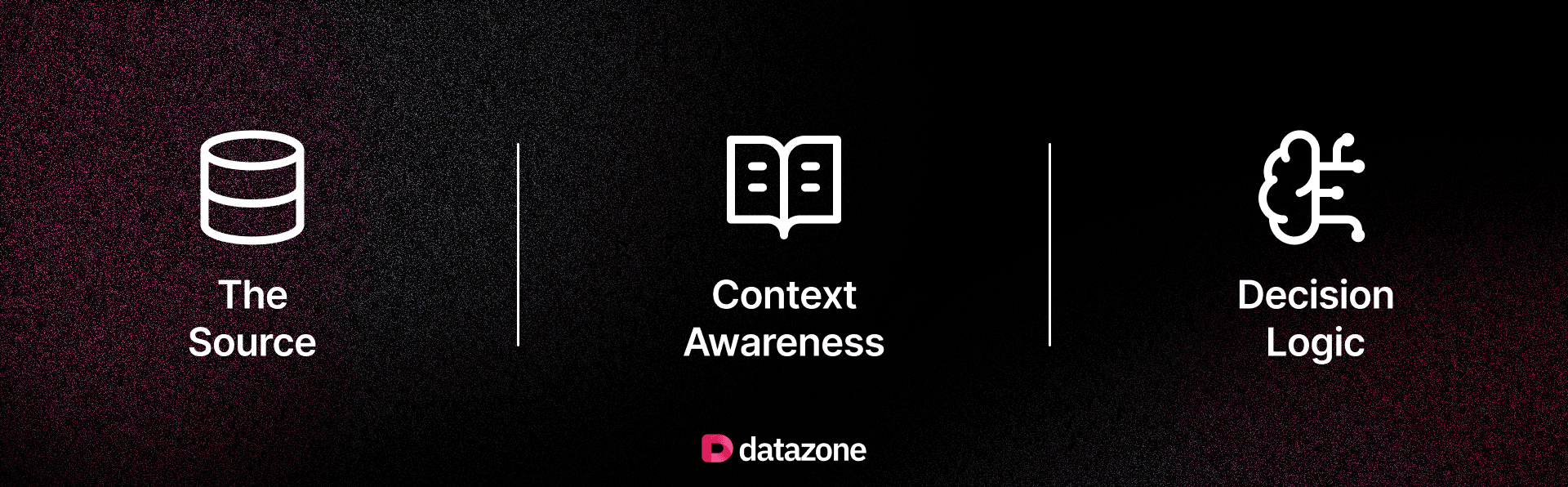
On our platform, agents are modular tools built on three pillars:
- The Source — The agent's world: specific datasets, views, or documents. It only looks at what matters.
- Context Awareness — It understands relationships (the "why"), not just rows of data.
- Decision Logic — The rules and patterns that allow it to trigger real-world actions.

The bottom line
What makes an agent "think" rather than just "respond" is the graph. We are moving away from disconnected metrics and moving toward connected intelligence.
Without context, an agent is a distraction. With context, an agent is an insight machine.
That's why agents make sense on Datazone.

Still chasing data across tools and teams?
Datazone unifies your data workflows — faster, clearer, smarter.
Get Started – It’s Free